Hospitals deliberately targeted by Sudan’s RSF fighters, BBC finds
 5 min read
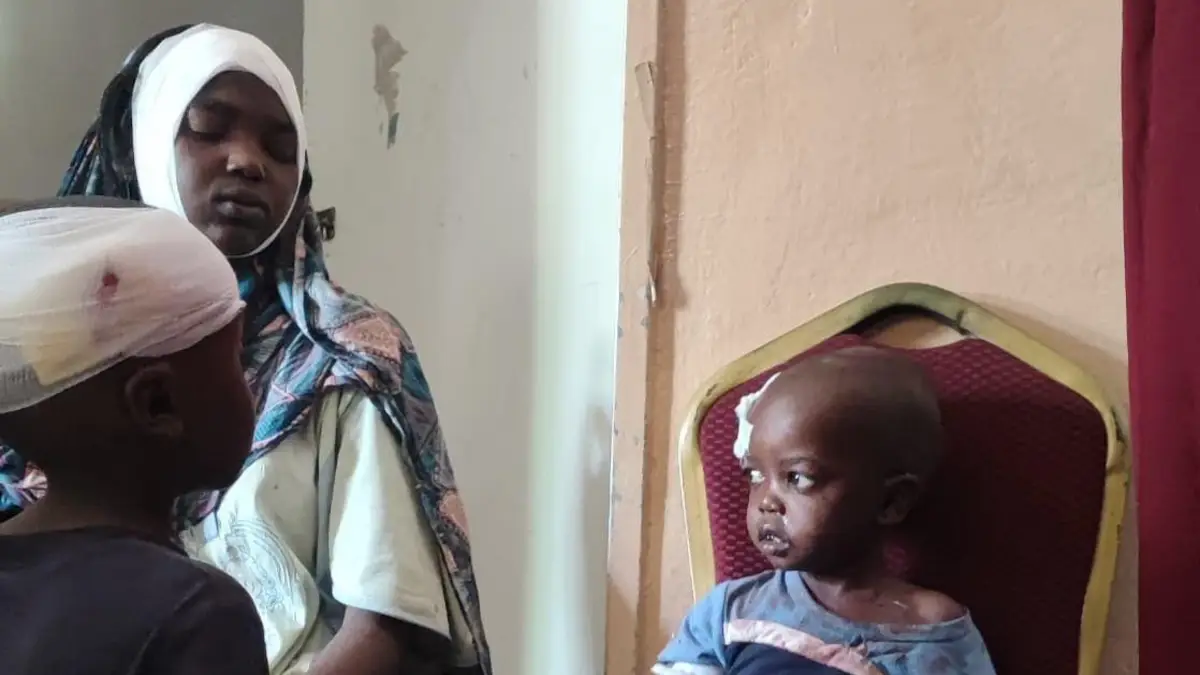
A BBC investigation has found evidence that Sudanese paramilitary fighters systematically destroyed el-Fasher's healthcare system during their long siege and subsequent takeover of the city in Darfur a year ago.
UN human rights chief Volker Türk called the findings "deeply disturbing", saying multiple attacks by the Rapid Support Forces (RSF) on civilian infrastructure, including health facilities, were serious violations of international humanitarian law and may amount to war crimes.
The health minister of the group's civilian-affiliated government dismissed the allegations as propaganda.
Dr Alaa Eldin Nugud said it was a deliberate attempt by the national army and its allies to smear the RSF's reputation.
Using sources who were on the ground in el-Fasher, the BBC has found details of at least 43 separate attacks on hospitals and healthcare sites from May 2024 to October 2025 – some hit multiple times.
Under international law it is illegal to attack health facilities or their staff during conflict.
The investigation also reveals the toll on medical workers in the western city. In the period from April 2023 to October 2025, the BBC's data shows 120 were injured, 55 killed and 10 forcibly "disappeared" or abducted.
"The RSF [were] trying to evacuate the hospitals, to put them out of service because the health system is the cornerstone of any city or any state," says Dr Muhamed Suliman, a surgeon who was based in el-Fasher during the siege and spoke to the BBC.
"The RSF started hitting these areas so citizens have no longer any way to stay there. It was intense. It was deliberate. It was planned."
The investigation comes a year after the fall of el-Fasher, one of the most brutal chapters of the civil war which erupted in April 2023 between the RSF and Sudan's military.
Both sides have been accused of attacks on health facilities.
In March 2026, the World Health Organization (WHO) condemned the bombing of al-Daein hospital in RSF-held eastern Darfur, which killed dozens and forced the site to close. Sudan's military is believed to have carried out the drone strikes, although it has denied responsibility.
But events in el-Fasher represent "one of the clearest and most severe examples of the wider impact of the conflict on health care in Sudan," the WHO said in response to a BBC query.
UN investigators have reported that the fighting in el-Fasher bore the "hallmarks of genocide", where historical ethnic animosities have seen Arab militias – now the backbone of RSF forces – target non-Arab groups such as those that populate the city.
The BBC's investigation reveals for the first time a detailed chronology of attacks on healthcare during the long siege of the city.
Reports of mass killings in Sudan have echoes of its dark past
Sudan army drones hit mourners and fuel market killing more than 300 people, sources say
Some medical facilities in el-Fasher closed down within weeks of the country's civil war starting in April 2023.
Crucially this included one of the main hospitals – the Teaching Hospital – located in a conflict zone in the middle of the city.
Its operations were moved to el-Fasher's South Hospital. There medical services continued, although increasingly hindered by power cuts and dwindling supplies.
The situation changed dramatically a year later, when the RSF mounted its siege of el-Fasher.
In late May and early June of 2024, the South Hospital was shelled several times as paramilitary fighters pushed forward from their positions in the east of the city.
The first bombing came as a shock, says Dr Suliman.
The area around the hospital that was hit was "very crowded because it was the only working hospital in the city providing surgical services", he says.
On that day medical staff operated on 16 injured patients, he added.
The attacks culminated in an RSF raid on 8 June. Hospital staff were taken by surprise – many of them escaped over the back wall as the RSF fighters entered the building, says Dr Mustafa Ahmed, a pharmaceutical specialist.
But the director general of the hospital, surgeon Izzeldin Ahmed Dawaud Asow, encountered a group of the paramilitaries outside his office.
They did not know he was a doctor, he said, but denounced him with ethnic slurs.
"There are no citizens here. You are Falangi," they said, using a derogatory term implying that non-Arab Sudanese are foreigners.
Dr Asow says he was beaten with rifle butts and lost consciousness at one point. Ultimately, he saved himself by pretending to be dead.
"They put their hand on my chest, and I stopped breathing. And they said: 'Leave him, leave him. The rubbish has died. Leave him.' They left me."
That same day the RSF was driven out by the Sudanese military and its allies and Dr Asow returned to find the bodies of several patients and the surgical equipment in his operating room thoroughly destroyed, he said.
The hospital closed and later fell into RSF hands when the army retreated.
Dr Nugud, a prominent Sudanese surgeon who has joined the RSF-backed civilian government as health minister, insisted the South Hospital was being used as a military base.
According to international law, hospitals can lose their protection if they are used by a party to the conflict to commit an "act harmful to the enemy".
In an interview with the BBC, Dr Nugud declared that missile launchers were set up on the grounds and shared a video showing remains of weapons filmed more than a year after the hospital closed, which he said supported his claim.
He also showed us what he called maps of landmines planted around the Teaching Hospital, which is located next to Sudanese military headquarters.
Doctors told us the hospital was not incorporated into the base and said they visited it to pick up medical equipment during the war.
The BBC has found no independent evidence of Dr Nugud's allegations. And the government of the Darfur region categorically rejected the charges.
After the South Hospital shut, its staff and remaining equipment were moved to the Saudi Maternity Hospital in the west of the city, where the army had its main bases.