Young musicians connect a community across the Line of Control
 1 min read
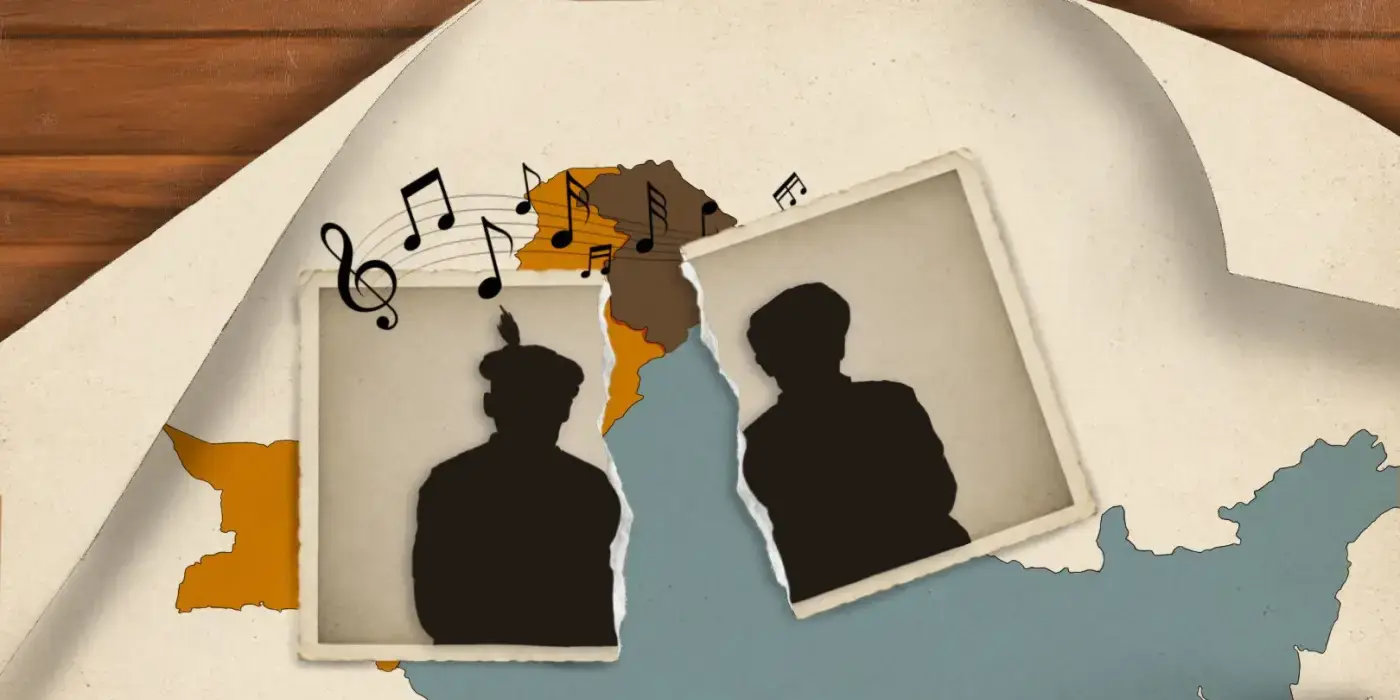
This feature is part of a series examining how artificial borders reshape daily life, divide families and force loved ones to navigate the human cost of political geography.
In the remote Tulail Valley close to the Line of Control in Indian-administered Kashmir, 25-year-old singer Aasim Yaseen was walking through his village, Buglinder, when a college student from a neighbouring hamlet stopped him.
The young man, Tanveer, took out his phone and played Sangh Mukh Shamah, a song Yaseen had recently released in Shina, their shared language.
“People here don’t consider music work,” he says.
“Sometimes I think about going into another profession, but then someone plays my song on their phone, and I keep going.”
Across Gurez in Indian-administered Jammu and Kashmir, Drass in Indian-administered Ladakh, and Pakistan-administered Gilgit-Baltistan, young musicians like Yaseen are sharing Shina songs on social media. They are helping keep their language alive and renewing ties within a community that has been divided for generations.
The songs cross the Line of Control, which divides Indian- and Pakistani-administered parts of Kashmir. But the musicians face financial pressures, unreliable internet connections and political restrictions on their movement.