Riemann hypothesis: Has the world’s most famous maths problem been cracked?
 1 min read
A mathematician from the tech giant Anthropic claims to have proven one of the world’s most famous – and most elusive – maths problems with the help of AI.
Levent Alpoge wrote on his website on Friday: “I believe I have, working with Claude, discovered a proof of the Riemann Hypothesis.”
If his claim holds up, the proof he says he has would settle a question that has defeated mathematicians for 167 years. Independent experts are now trying to verify it, but so far no human has read through the entire argument.
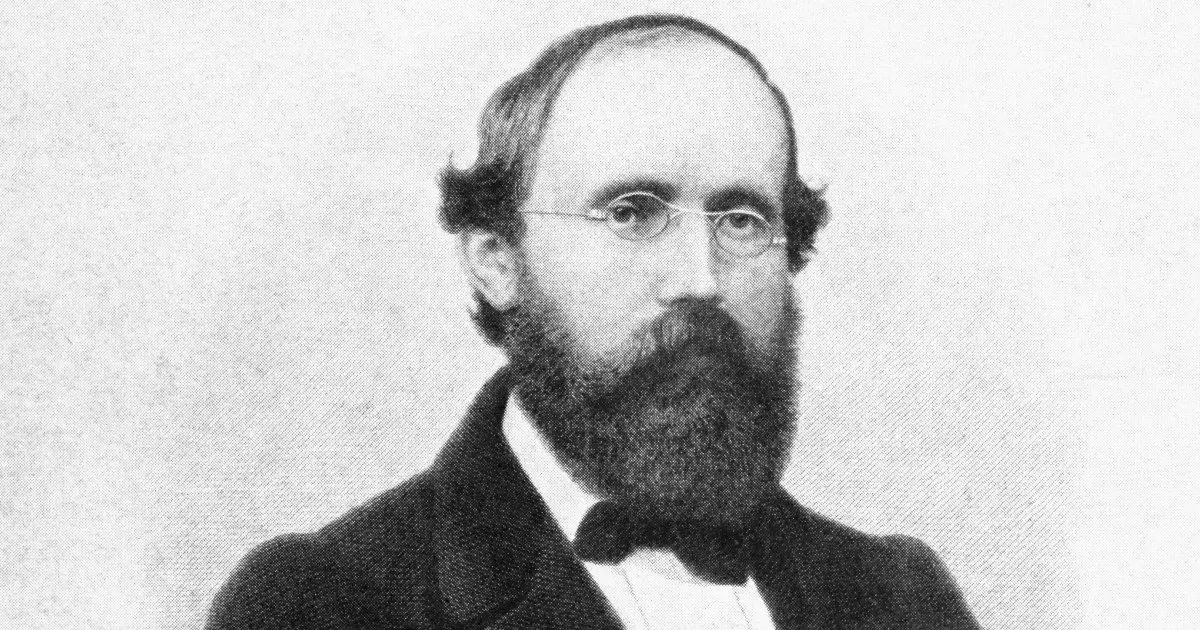
First proposed by German mathematician Bernhard Riemann in 1859, the hypothesis concerns the distribution of prime numbers and is widely regarded as the most important open question in pure mathematics.
Prime numbers are whole numbers which can be divided only by one and themselves, such as 2, 3, 5 and 7. They appear to be scattered along the number line with no obvious pattern but the Riemann hypothesis proposes that their overall distribution actually follows a deep, hidden order – just one that humans have yet to identify.
“The Riemann hypothesis is the most famous and important unsolved problem in mathematics,” Abhishek Saha, professor of mathematics at Queen Mary University of London, told Al Jazeera.
“The patterns of the primes are encoded in a mathematical object called the Riemann zeta function, introduced by Bernhard Riemann in 1859.”
It is one of the seven Clay Mathematics Institute Millennium Prize Problems, each carrying a $1m award.