‘I want to destroy capitalism, not France’: On the streets with the French ultra left
 6 min read
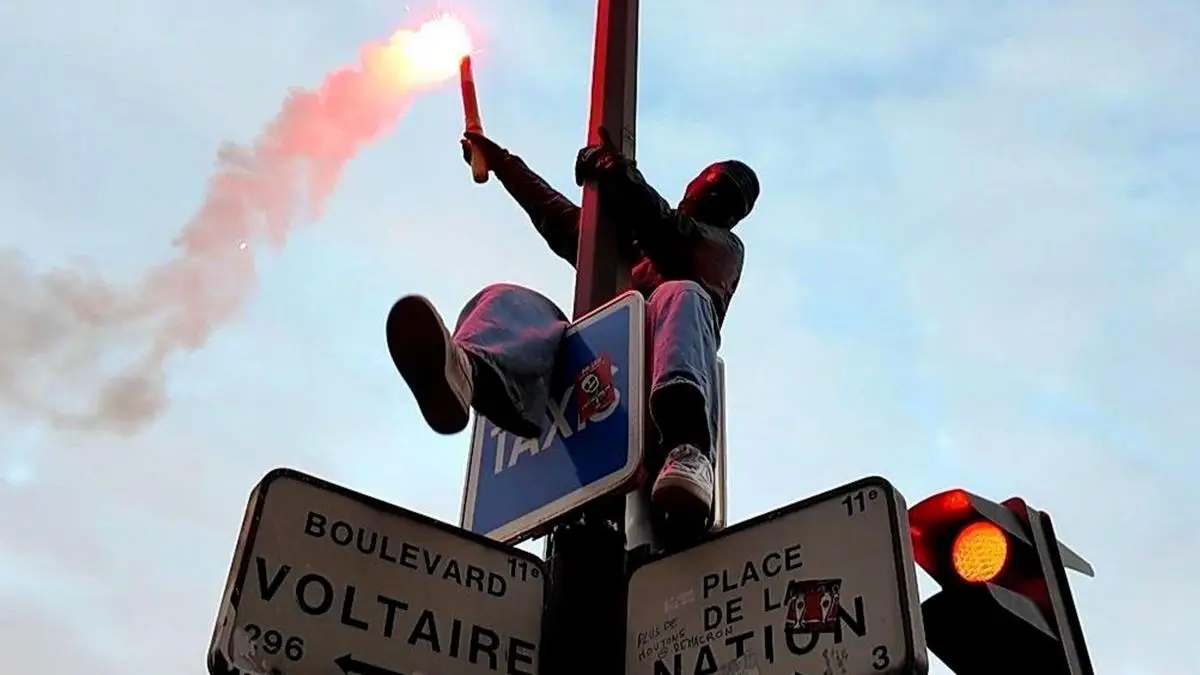
France is in turmoil. Crippling public debt, a "lame-duck" president with six months left in office, and massive social unrest – sparked by student protests which have erupted into looting and violence.
This Saturday marked the sixth weekend in a row of demos against soaring prices, worsening public services and alleged police brutality. Violence by protesters is down on last month but still present.
President Emmanuel Macron has publicly blamed riots on "delinquents" and "ultra-left groups" whose aim, he says, is to bring down the French Republic.
That's quite a claim – and one that needs examining.
The unrest in France has become a political football ahead of key presidential and parliamentary elections next year. The left in France blames the centre and right for the cost-of-living crisis that's making French people so upset and angry. They blame the hard left for fomenting violence (which they deny). While the nationalist right pledges, if elected, it will return order and security to France's streets.
So, who exactly are these "ultra-left" groups Macron speaks of? And how organised and dangerous are they?
It's infamously hard to speak to members of the radical left. They don't much like what they call mainstream media. We're viewed as part of an establishment many of them despise.
My best bet was to head out into the protests and try to approach people dressed in all black and ski masks or balaclavas (worn, they say, to hide their identity from police). It's a quasi-uniform associated with left-wing rioters or disruptors, known as the Black Block.
You see them at demos all over Europe. In France, they tend to appear from city side streets, as daytime protests are dying down, dusk is falling and riot police begin to emerge in full force.
French intelligence drastically underestimated the outpouring of anger, looting and destruction following protests last month. More than 1,000 police officers were reportedly injured, young protesters had bones broken and two reportedly lost a hand in altercations with police armed with stun grenades. Le Monde newspaper has an article, external it is constantly updating to investigate a rising number of reports of protester injuries. The French Insurers Federation estimates damages to shops and private property on 17 October alone – the day of the biggest riots – came to around €207m (£175.5m).
Since then, the French authorities are trying to tightly manage demos. Police presence is heavy. Protesters say heavy handed.
Towards the end of one of the protests this month, we saw would-be rioters vastly outnumbered, glass bottles and homemade paint bombs at the ready to throw at police. They were no match for the batons, stun grenades and tear gas the officers had to hand.
As we were being forcefully kettled in by police, I tried to talk to would-be rioters. Few wanted to engage but I then met 18-year-old Nas (not his real name) and friends. They would only speak to me if they could hide their identity. This was to avoid police detection, they said.
Milling, you could say provocatively, by baton-at-the-ready police – they seemed to fit a radical-left rioter stereotype.
"How can you justify the violence?" I ask them.
"Without violence, you don't achieve anything," one of them tells me. "It's the only way to get our voices heard."
"We come from an area with a bad reputation. Our schools are a mess. Our teachers quit. You need qualifications to get a decent job. There is supposed to be equality in France. We won't give up our fight."
These young men, we discover, come from the sprawling housing estates common on French city outskirts – the banlieues – associated with deprivation, unrest and second or third generation immigrant families.
They weren't politicised or organised by the radical left, they insisted. Just angry.
Earlier, I had spotted two hard-left student activists, standing masked on top of a bus shelter, above the thronging crowd of protesters waving banners sporting the red anarchist sign and the symbol for the Antifa (anti-fascist) movement.
I put it to them that France has a proud tradition and respect for the right to protest but that the country has been horrified by the violence it's seen over the last weeks.
They were keen to downplay the rioting but – again – would only speak if they could remain anonymous.
"Violence ends up reflecting badly on our movements. We don't like it. But what's a smashed shop window compared to police using stun guns on protesting school kids? Also, people [in France] are regularly going cold and hungry. They're losing faith in this society."
How could they believe violence would bring about a juster society, I wondered?
They shrug off my question. In France, these days, the real violence is state violence, they say.
French intelligence estimates there are 5,000 "ultra-left" activists in the country.
Anticapitalist Starflix (that's his codename) counts himself as one of them. The 17-year-old is also a member of the violent Black Block movement. We'd arranged to meet on the edge of the protest, by a narrow canal.
Fearful about being apprehended by police, he asked to remain anonymous.
He showed me a couple of homemade paint-bombs – eggshells filled with paint and sealed with medical tape that he throws at police officers. He carries them in his rucksack, wrapped in a royal blue Italia football shirt.
"We throw the paint bombs at the visors on riot police helmets, so they have to lift them up in order to see and that makes them suffer their own tear gas that they've sprayed at us," he tells me.
"We pick up stones and rocks too. Anything we find on the streets of Paris, to throw."
I put it to him that he and others in the Black Block are causing a lot of problems on French streets: damaging businesses, hurting police officers, destroying the demos for peaceful protesters. What is he trying to achieve?
As he's under 18, his parents give us permission to speak to him. They share his politics, Starflix tells me, but not all rioters – masked and dressed in black as he is – do.
"The Black Block isn't a single organisation. It's a technique. Some of us use violence to get government reform. I want to bring about a revolution.
"Other people are opportunists who use anonymity to steal things. When we all wear the same clothes, it makes it harder for police to identify us."
When I ask if he is scared he might get hurt or arrested, he admits he is but says what frightens him more is the thought that society might not change.
Social media plays a huge role in the riots. Starflix tells me he and his friends use Signal and Telegram to arrange to meet at protests.
There are numerous websites and Instagram profiles, mainly hosted by left-wing organisations, offering tips for protesters and rioters, such as: keep your phone at home so police can't track you, cover your face to avoid being identified and emulate martial arts expert Bruce Lee and "be like water" – appearing and disappearing into crowds. That's advice passed on by the Hong Kong protesters eight years ago.
While not formally organising the protests or violence with these posts, could the fact groups host this information online be viewed as a kind of incitement or manipulation of youngsters whose feelings are running so high in France?
All the young rioters I spoke to insist they are not being herded or directed, but is there something bigger behind what's happening?