Iqbal in space: Urdu poet’s verses unite India, Pakistan beyond Earth
 1 min read
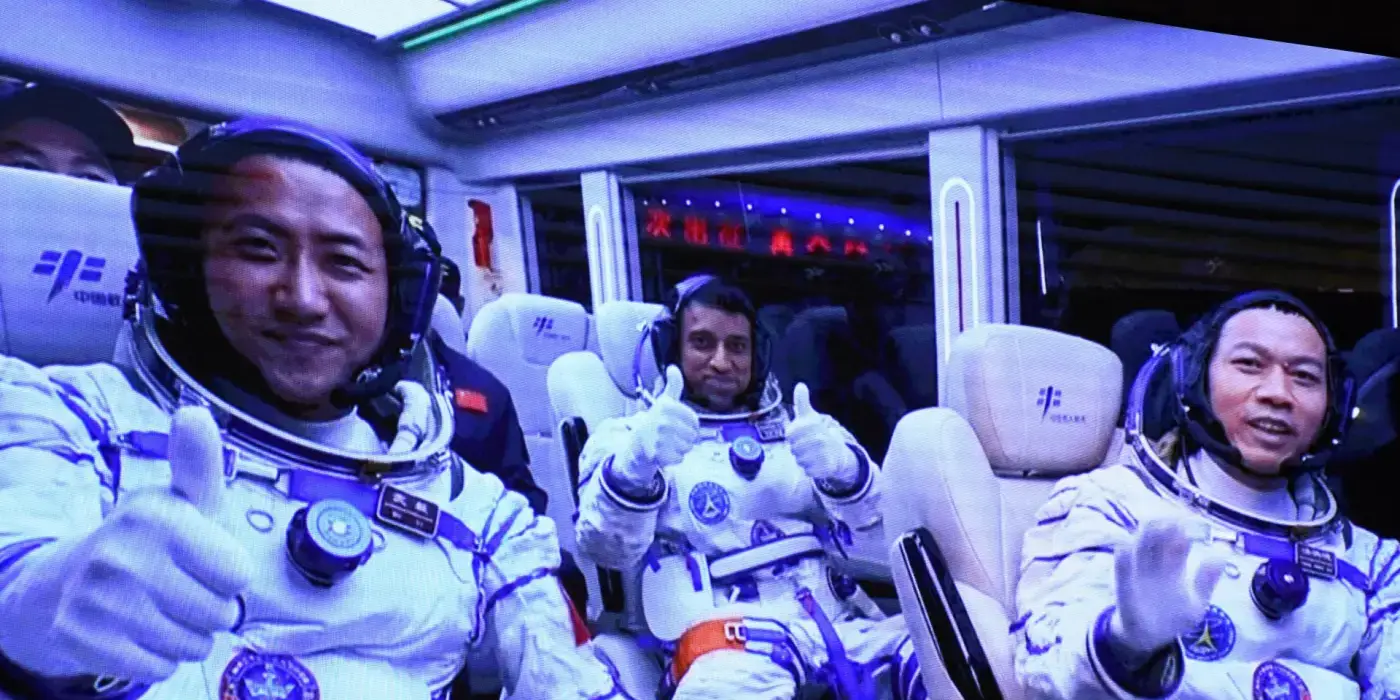
Islamabad, Pakistan – Floating inside China’s Tiangong space station on Wednesday, Muhammad Zeeshan Ali turned to a poet from home.
Wearing a blue flight suit bearing the green-and-white Pakistani flag and surrounded by five Chinese crewmates, Pakistan’s first astronaut recited a couplet by Muhammad Iqbal, the country’s national poet.
“Sitaron se aage jahan aur bhi hain / abhi ishq ke imtihan aur bhi hain,” Ali said.
He paused briefly between the two lines before repeating the opening phrase and completing the verse, trying to steady himself as he floated.
He then smoothly switched to Mandarin, translating the couplet’s meaning to his Chinese crewmates.
“Countless worlds lie beyond the stars, and countless trials are still ahead,” he said.
As he finished with a thank-you and a smile, the crew broke into applause and cheers before coming together for midair hugs and laughter.
But this was not the first time Iqbal’s poetry had travelled from Earth into orbit.
The first such exchange took place in 1984, when Rakesh Sharma, the first Indian in space, invoked the poet’s words while responding to then Indian Prime Minister Indira Gandhi’s question about how India looked from above.
In 1997, another Indian-born astronaut, Kalpana Chawla, heard Iqbal’s poetry quoted by then-Indian Prime Minister Inder Kumar Gujral during a conversation from orbit. Gujral recited the opening line of the same couplet Ali would read to his Chinese crewmates decades later.
Iqbal was a poet, philosopher and political thinker whose ideas helped shape Muslim politics in South Asia in the early 20th century.