US environmental agency says no rise in contamination after Iowa detonation
 1 min read
Initial laboratory results indicate that the controlled detonation of five tonnes of dangerous lead azide in southeast Iowa has not caused a rise in levels of the heavy metal in the bodies of water that supply drinking water to the area, according to the US Environmental Protection Agency (EPA).
The EPA posted its readings online on Saturday, three days after US Army engineers blew up nearly five tonnes (4,500 kg) of highly volatile lead azide stored in 68 degrading plastic drums. The orchestrated demolition was carried out in two simultaneous explosions at an army munitions depot in the tiny farming town of Middletown, Iowa, about 150 miles (241km) southwest of Des Moines, the state capital.
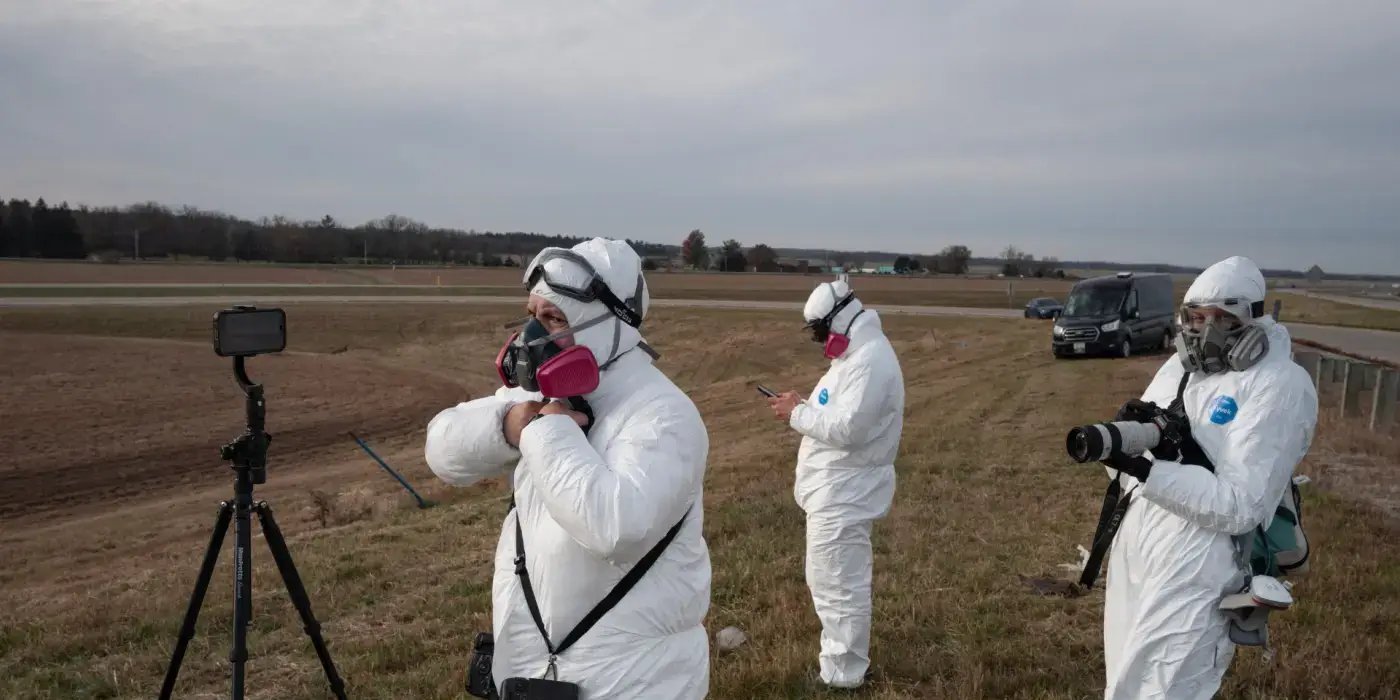
The EPA said about 300 people spent Thursday sampling at schools, playgrounds, churches and homes across the region. More than 1,500 samples were taken of air, water, soil and dust before the detonation and hundreds more afterwards, including from homes, parks and drinking water.
“The EPA monitored for the presence of airborne lead for 30 consecutive hours after the controlled detonation using the Xact air monitoring system. We will continue to provide updates in the coming days as new lab results for over 3,200 air, soil, dust and water samples … return and get validated,” the EPA posted on X.
Lead is a heavy metal that’s especially dangerous to children and pregnant women. Once it settles in the environment, it does not break down. Army commanders said the safest option was to immediately detonate the stockpile because it was degrading and might explode at any time as the weather got colder.